
Computing
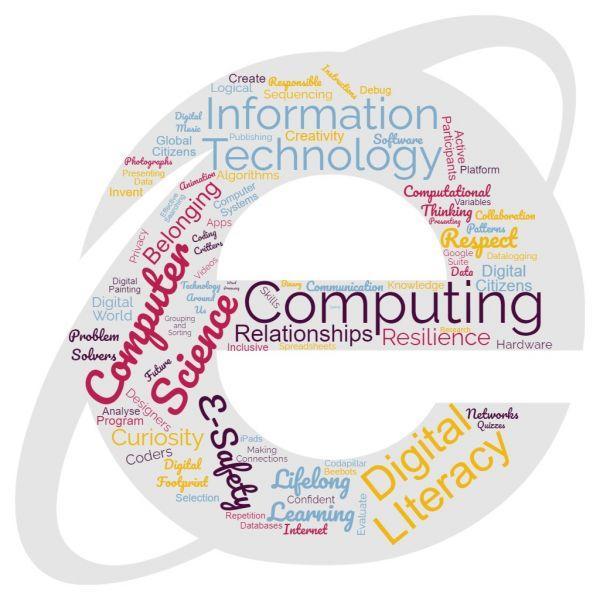
Computing at Anton Junior School
Our Vision for Computing
At our school, Computing empowers children to become confident, creative, and responsible users of technology. Our curriculum equips pupils with the knowledge, skills, and understanding needed to thrive in an increasingly digital world.
Through the teaching of computer science, children develop a secure understanding of fundamental principles such as abstraction, logic, algorithms, and data representation. They are taught to think computationally, breaking down problems into manageable parts and applying logical reasoning to find solutions. Regular, hands-on experiences of writing and debugging programs enable pupils to apply their learning in practical and meaningful ways.
As children progress, they learn to evaluate and use information technology purposefully, including new and unfamiliar technologies. Our children are encouraged to think analytically about how digital tools can be applied to solve real-world problems, supporting creativity, efficiency, and innovation.
Alongside technical knowledge, we place a strong emphasis on digital responsibility. We aim to ensure that all children are competent, confident and safe users of information and communication technology, who understand the importance of online safety, ethical use and respectful digital citizenship.
By the time pupils leave our school, they will have developed the skills, confidence, and curiosity needed to engage positively with technology, preparing them for future learning, employment, and life in a digital society.
Computing Overview
|
Autumn 1 |
Autumn 2 |
Spring 1 |
Spring 2 |
Summer 1 |
Summer 2 |
|
|
Year 3 |
E-Safety: Self-image and identity Computing: Online Safety |
E-Safety: Privacy and Security Computing: N/A (Christmas Performance) |
E-Safety: Online Bullying and Relationships Computing: Computing systems and networks 1 |
E-Safety: Copyright and Ownership Computing: Computing systems and networks 3 |
E-Safety: Online Reputation and Managing Online Information Computing: Creating Media |
E-Safety: Health, Wellbeing and Lifestyle Computing: Programming |
|
Year 4 |
E-Safety: Online Bullying, self-image and identity Computing: Online Safety |
E-Safety: Copyright and Ownership Computing: Computing systems and networks |
E-Safety: Privacy and Security Computing: Programming 1 |
E-Safety: Online Reputation and online relationships Computing: Data Handling |
E-Safety: Managing online information Computing: N/A (Residential) |
E-Safety: Health, Wellbeing and Lifestyle Computing: Programming 2 |
|
Year 5 |
E-Safety: Managing online information, self-image and identity Computing: Online safety |
E-Safety: Online Bullying Computing: Computing systems and networks |
E-Safety: Online Relationships Computing: Data Handling |
E-Safety: Privacy and Security Computing: Creating media |
E-Safety: Copyright and Ownership Computing: Programming |
E-Safety: Online Reputation, health, wellbeing and lifestyle Computing: N/A |
|
Year 6 |
E-Safety: Managing online information, copyright and ownership Computing: Online safety |
E-Safety: Privacy and Security Computing: Computer systems and networks |
E-Safety: Online Reputation and Relationships Computing: Data Handling |
E-Safety: Online Bullying Computing: N/A (SATS) |
E-Safety: Health and Wellbeing Computing: Computer systems and networks |
E-Safety: Self-image and identity Computing: Programming |